Phase 1 -London four weeks: Phase 2 - Kennett Canal three days: Phase 3 - Italy one week: Phase 4 - Midlands & Northumberland: 1 week: Phase 5 - Cardiff Wales 3 nights: Return to Australia
Monday, 18 April 2016
Cloth Fair House, Smithfield, London (and neighbouring pub)
Hidden down a small street in Farringdon lies a quite remarkable building – 41/42 Cloth Fair. Built between 1597 and 1614, this is the only house in the City of London to have survived the Great Fire of London in 1666.
Records tell us that the reason it escaped the brunt of the fire was due to it being enclosed within a large set of priory walls. Records also show that the building was originally part of a larger scheme of eleven houses featuring a courtyard in the middle, known as "The Square in Launders Green". Source: Google Search - comment by Ben Johnson
A set of leaded windows within the property bear the signatures (etched with a diamond pen) of some rather famous visitors; Sir Winston Churchill and the Queen Mother to name just two! Source: Google Search - comment by Ben Johnson
The Rising Sun is an old and attractive, traditional pub hidden away in a Dickensian-looking alley next door to the magnificent and historic Priory Church of Saint Bartholomew the Great.. Unlike other nearby establishments popular with the besuited chaps from the City, this pub seems to attract an interesting mix of regulars, including local office workers, students and designery types from the agencies around. It's a pretty comfortable place with darts and fruit machines up at one end, friendly service, cheap grub and a Tuesday quiz night. With well-priced, well-kept Sam Smith's beers, its a good pub if you happen by and it's also one of the few places open at weekends in Smithfield. (Source: google Search)
Records tell us that the reason it escaped the brunt of the fire was due to it being enclosed within a large set of priory walls. Records also show that the building was originally part of a larger scheme of eleven houses featuring a courtyard in the middle, known as "The Square in Launders Green". Source: Google Search - comment by Ben Johnson
A set of leaded windows within the property bear the signatures (etched with a diamond pen) of some rather famous visitors; Sir Winston Churchill and the Queen Mother to name just two! Source: Google Search - comment by Ben Johnson
Sunday, 17 April 2016
Tuesday, 12 April 2016
Monday, 11 April 2016
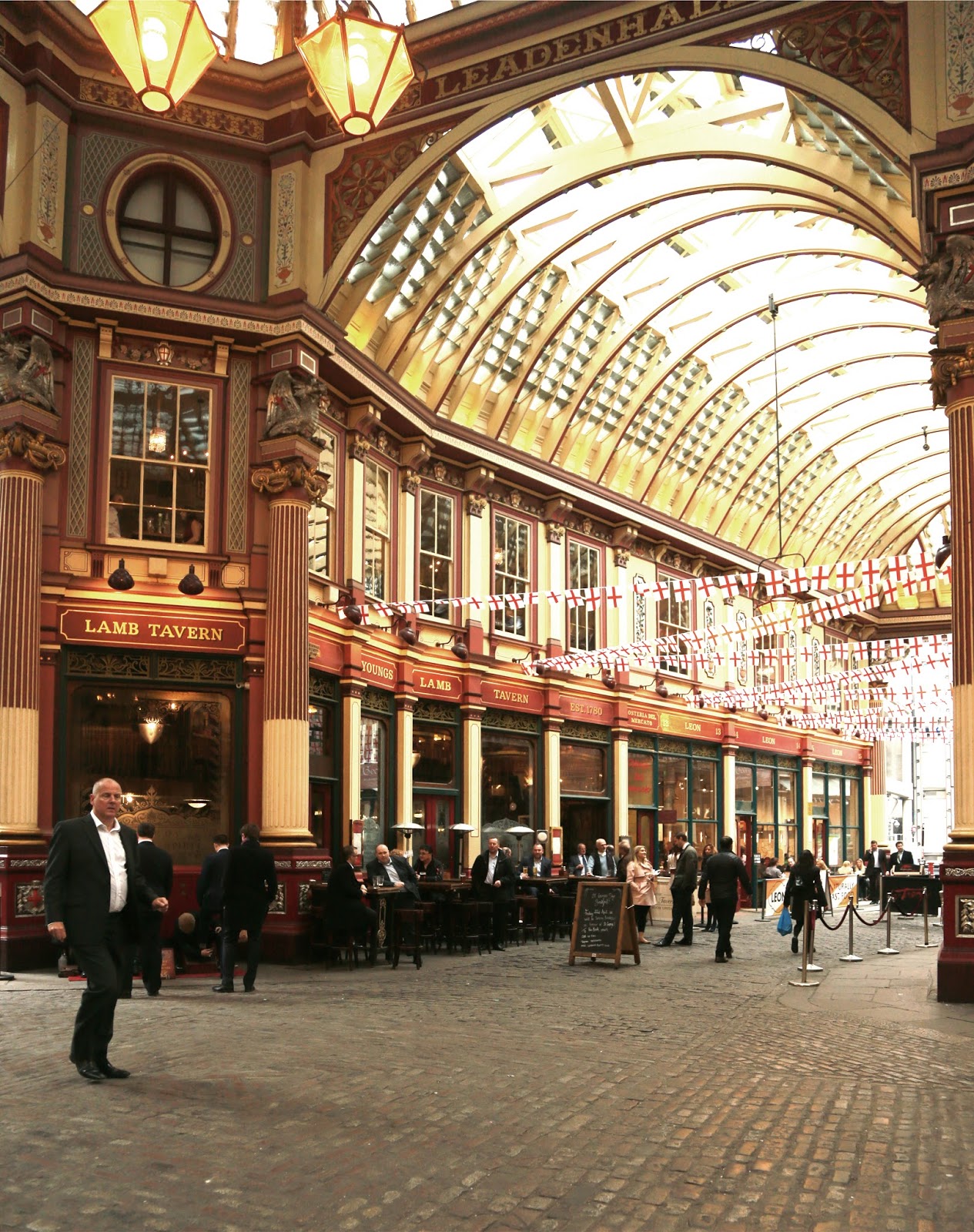
City of London, Leadenhall Market, Contemporary Architecture and Monument
Leadenhall Market dates from about the 14th century, although this luxurious architecture was erected in 1881.
The hustle and bustle of markets such as that at Camden is missing from this, which is more like a classy arcade.
The beautifully designed architecture of the 1881 version of Leadenhall market provided a lovely subject for Gary's photographic interests.
Having started out as a market for meat, cheese, fish, and other foodstuffs, this Leadenhall market is more a meeting place for London trendies who enjoy watching the world go by, over their cafe lattes and fine wines.
There was one flower stall in the Leadenhall market, while all the rest of the sales areas were within actual shops, selling clothing (e.g., specialising in ties, or scarves, or hats), fine eating andrefreshments of various kinds).
As we walked from Leadenhall market back to the Monument tube station, we passed 20 Fenchurch Street, one of the modern notable architectural delights that has been nicknamed the 'walkie talkie'.
Also between Leadenhall market and Monument tube station we suddenly saw the 'Shard' in a misty sky beyond much older buildings.
Gary is very interested in the use to which stainless steel has been put in modern architecture, and so was delighted to suddenly be confronted by walls reflecting other colours as we passed down a laneway.
The Monument can be seen at the entrance to Monument tube station, in remembrance of the Great Fire of London of September 1666. Starting in a bakery in Pudding Lane, it burnt 13,200 houses, 87 churches, and St Paul's Cathedral, in three days of continuous burning, destroying all of the old City of London.
The hustle and bustle of markets such as that at Camden is missing from this, which is more like a classy arcade.
The beautifully designed architecture of the 1881 version of Leadenhall market provided a lovely subject for Gary's photographic interests.
Having started out as a market for meat, cheese, fish, and other foodstuffs, this Leadenhall market is more a meeting place for London trendies who enjoy watching the world go by, over their cafe lattes and fine wines.
There was one flower stall in the Leadenhall market, while all the rest of the sales areas were within actual shops, selling clothing (e.g., specialising in ties, or scarves, or hats), fine eating andrefreshments of various kinds).
As we walked from Leadenhall market back to the Monument tube station, we passed 20 Fenchurch Street, one of the modern notable architectural delights that has been nicknamed the 'walkie talkie'.
Also between Leadenhall market and Monument tube station we suddenly saw the 'Shard' in a misty sky beyond much older buildings.
Gary is very interested in the use to which stainless steel has been put in modern architecture, and so was delighted to suddenly be confronted by walls reflecting other colours as we passed down a laneway.
The Monument can be seen at the entrance to Monument tube station, in remembrance of the Great Fire of London of September 1666. Starting in a bakery in Pudding Lane, it burnt 13,200 houses, 87 churches, and St Paul's Cathedral, in three days of continuous burning, destroying all of the old City of London.
Friday, 8 April 2016
Subscribe to:
Posts (Atom)